April is already coming to an end. Today we’re going to take a trip to Sommières. Before that, some expat updates from me.
Getting my carte de séjour renewed turned out to be as expected – a debacle. Seems easy, but when you want to be done quickly, it drags a bit. I passed all of the required red-tape to have the 10-year green card, including the civics exam and the TCF language test (french test accepted by the state): which includes an oral exam, written, listening and reading comprehension. Turns out, I’m just renewing my current carte de séjour, so all that isn’t needed for now.
(As of January 1, 2026, the civics exam is mandatory for first time carte de séjour pluriannuelle recipients and carte de résident (green card). In a later blog post, I will go over how the tests were and the resources I used to study for them.)
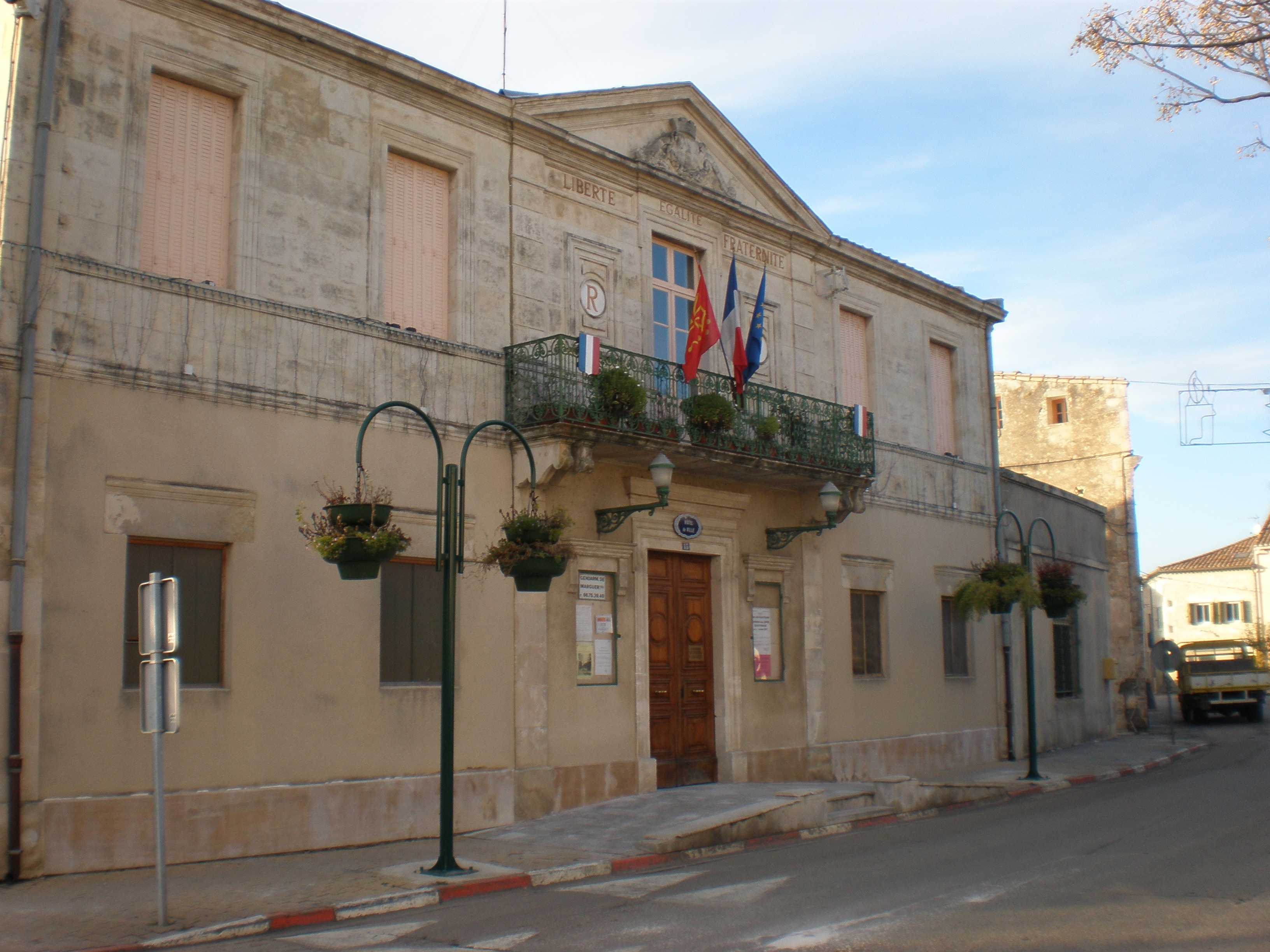
My next update comes more in the form of l’immobilier, aka real estate. I have a serene new villa on the market! Located next to Montpellier and if you haven’t heard of Sommières, it’s a beautiful, original, tasteful place to live in the South. The villa is surrounded by French wine country, outdoor activities around the Vidourle river, and a greenway (also known as a voie verte in French). The trail is made up of old train passages. When the weather is good (300/365 days), it attracts cyclists from all over. It includes long stretches of tunnels, old bridges and enchanting sounds of cicadas.
Last but not least, a thriving little market (every Saturday) in downtown Sommières.
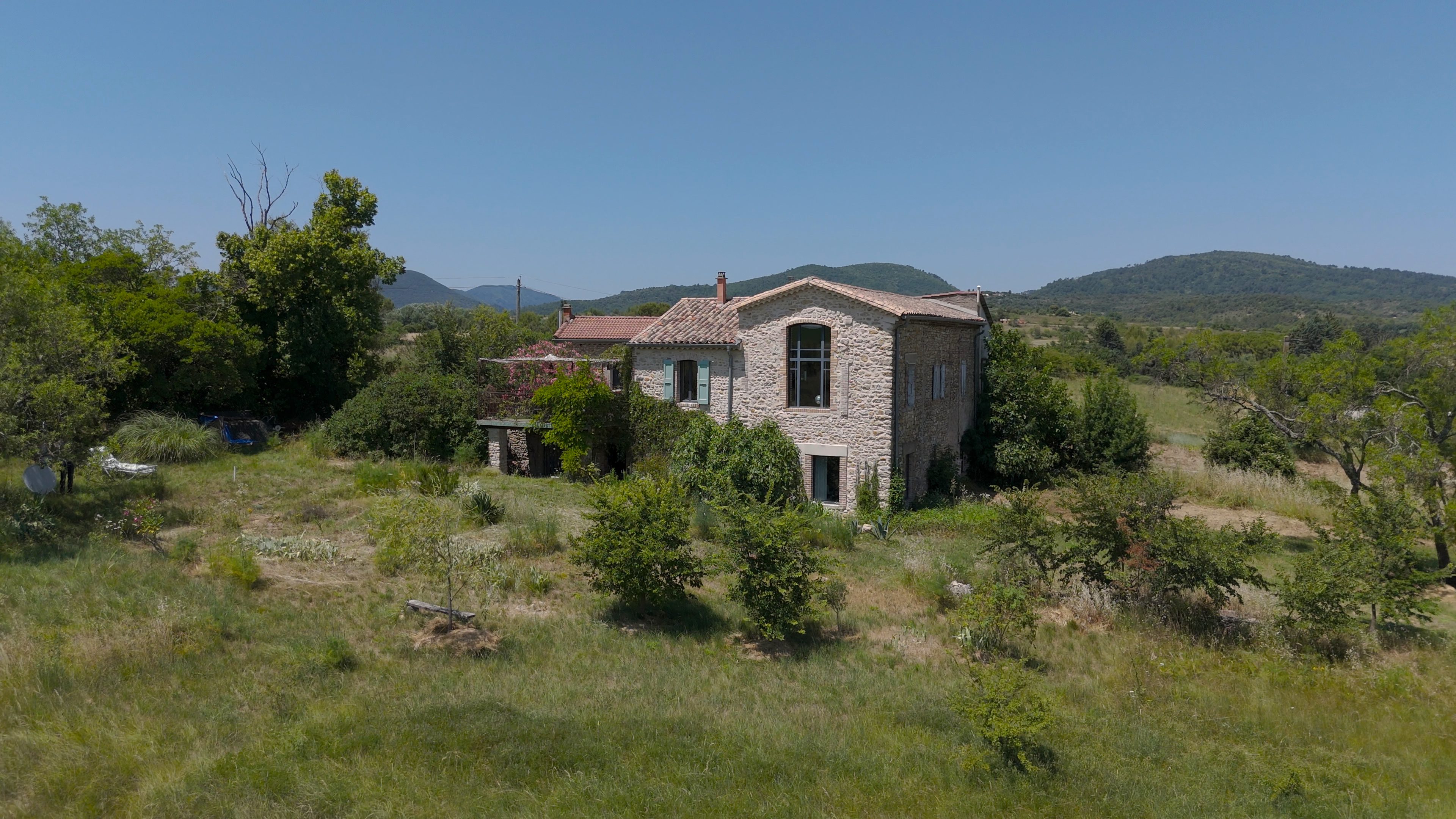
Here are the photos of the property.
Front lawn and Front of House with garage(original rustic, old barn)
Terrace, pergola, pool and outdoor couches(shaded)
Poolbuilt with stones(32m²(344 SF))
Lawn #2
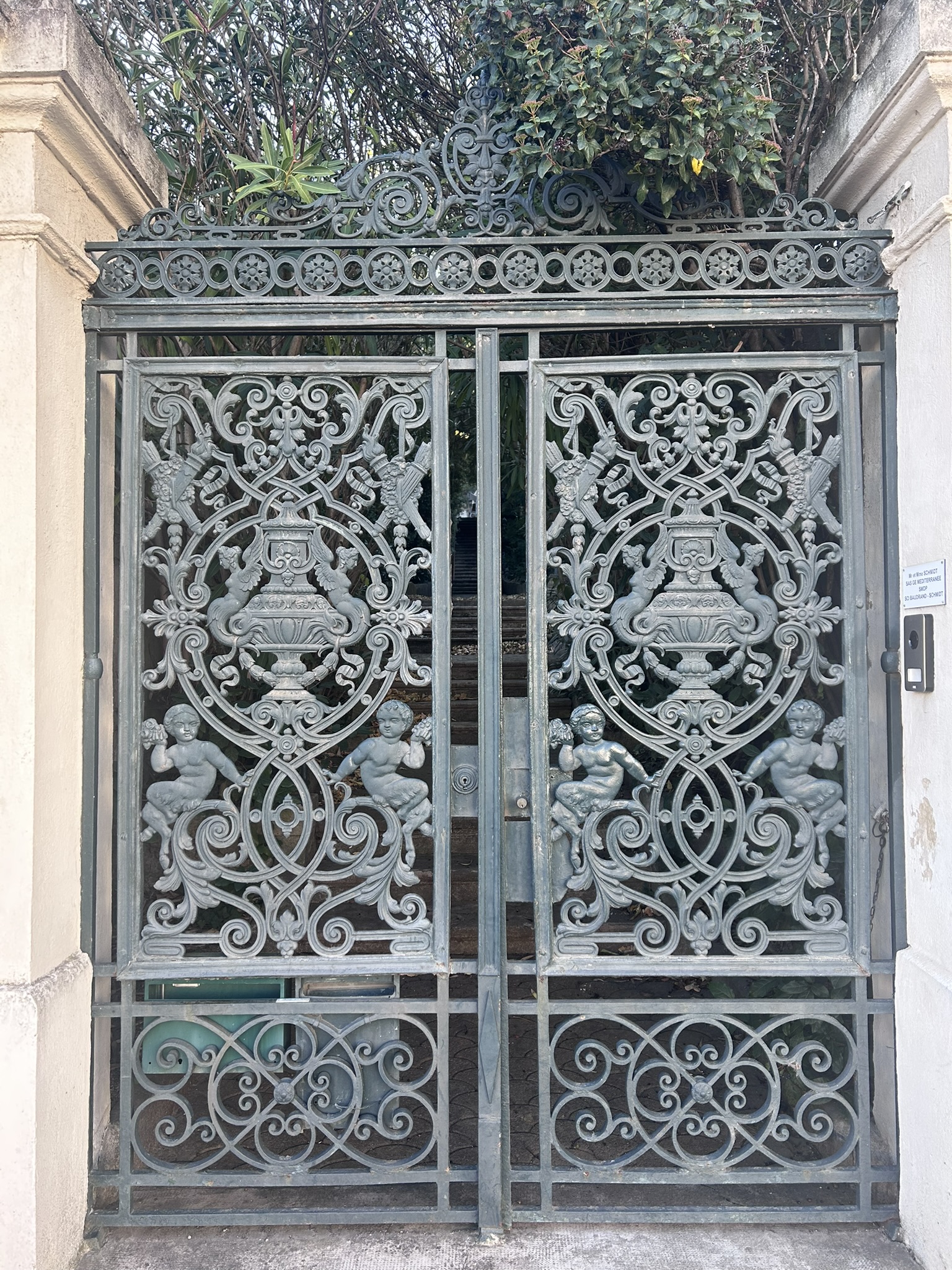
Entrance (automatic gate)
Surrounding natural wine vineyard
Inside: TheLiving roomwith chimney
Dining area
Kitchen
Living room: reverse view
Primary Bedroom
Walk-in closet
Shower
Bedroom #2
Bedroom #3
Bedroom #4
Bathroom
Floor Plan
Not pictured is the garage which is an untouched, old barn (currently used for storage) that has renovation potential written all over it. It could serve as a guest house with some serious Provençal charm. But think of visiting in-person, we could make a day of it! There is a vineyard in the town that offers horse and carriage tours (link, photo below). Let me know if you’re ready to kick off your house hunting with this gem.
Here are the numbers:
4 Bedroom, 2 Bath bungalow villa in between Montpellier and Nîmes, rebuilt in 2008.
155m² (1,668 SF)
Size of lot 1,322m² (1/3 of an acre)
Price: EUR 662,000 : $770,429
Huge terrace ~ 60m² (645 SF) with pergola. 2 pitches of lawn, and a 2-car garage with a mezzanine ~50m² (538 SF).
Hope your spring is starting off well. Here in Nîmes, the weather has been wonderful, sunny days (for the most part). For real estate, things are starting to pick up again as well. Later this month, I’ll be posting a new villa for sale in the Sommières area.
I often meet with English speakers searching for advice on the real estate market and naturally they’re looking for a deal. I’m learning that the currency exchange space has the capacity to also account for some big savings, especially with high-end properties. I admit that I’m a bit new to it all, so last week, when Kaiden from Currencies 4 You reached out it was truly serendipitous. It turned into a quick Q&A. Enjoy!
Kaiden Shaw is a Business Relationship Manager who deals specifically with large international purchases and is based in the UK.
Les Terrasses Immobilier (LTI): Appreciate you taking the time. How are you doing?
Kaiden(KS): I’m doing well, just been fairly busy with clients as markets have been volatile.
LTI: Busy is good! To start off, what made you interested in Currencies 4 You?
KS: I joined Currencies 4 You because I wanted to be in a position where I could genuinely impact the outcome of a client’s transaction, not just facilitate it. In property, currency exchange is often treated as an afterthought, but on larger purchases it can materially change the total cost. That’s where I focus.
LTI: OK, great so a typical client will be someone who’s searching to make larger purchases, like at least €500,000.
In your own words, why choose Currencies 4 You? Can you talk more in-depth about your approach and how your team is able to save your clients money? More points if it involves a past deal and cherry on top if this was during a geopolitical climate like today.
KS: Most clients we work with initially default to their bank, where margins can sit around 3–4% on international transfers. We typically operate closer to 0.5% or better, depending on the size and structure of the deal. On a property purchase, that difference alone can translate into tens of thousands saved.
Where we add the most value, though, is in how we manage the timing and execution. We look at the client’s completion date, what’s currently driving the market, and whether it makes sense to secure the rate or leave some exposure. It’s not just about getting a better price, it’s about controlling the risk around it.
LTI: All right, that’s very interesting. Today, I’m learning a lot. The timing seems to be a major factor. Can you give us an example?
KS: I worked with an American client purchasing a property in Mougins for €2,000,000. They were planning to move funds through their US bank. By stepping in, we improved their USD to EUR rate by approximately 3.5%, reducing their overall cost by $82,640.
LTI: Wow. That’s a lot of savings.
KS: This becomes even more relevant in the current market. With ongoing geopolitical tension, inflation data, and central bank decisions from the Federal Reserve (Fed) and the European Central Bank (ECB) driving volatility, exchange rates are moving quickly. For clients working to fixed completion timelines, that movement can significantly impact the final property cost if it’s not managed properly.
Our role is to give clients visibility, pricing transparency, and control over that exposure, rather than leaving it to a bank rate on the day.
LTI: Ok, I understand much more than before. Like I said it’s great to learn about savings, when all we hear about is prices going up. Thanks for taking the time, Kaiden.
For those looking to get in touch. You can send him a message here. And here is the link to their website (link).
The Carrez law was made for buyers. And it makes the buying process more transparent for apartments in France, however, there are certain nuances that buyers should know about, especially for those purchasing site-unseen. I’ve put together a list of vocab for those that are curious, and today, let’s add to the list the Loi Carrez (z pronounced!) or The Carrez Law.
Hi there, hope you’re staying warm this winter. I wanted to share a list of words that I’ve…
The Carrez Law is a form of consumer protection. Of course, the more hot the housing market, the more important it can be. That said, no one wants to be lied to. So here are some ways you can inform yourself when hunting for your dream property in France.
Inspections
Homeowners in France must use a diagnostics company to determine their diagnostique performance energetique (DPE). Diagnostiqueurs usually offer a package and throw in additional services. Like measurement in surface privative (Carrez law corrected measurement), asbestos check, termites check and lead checks. Finally, they can also evaluate the electric and gas situation. The total usually ends up being ~EUR 420.
That said, not every homeowner goes the extra mile to have all of these tests done. Some wait until they’re getting closer to having a deal in place before spending their hard-earned euros. So if you want to know, for example, the size of the space you’re paying for, what do you do?
First, does the Carrez Law apply?
If it’s an apartment you have your eye on, you’re in luck, the Carrez law does apply (also applies to a house in coproprieté, office spaces in coproprieté or stores). The measurement must be mentioned in the ad. Unfortunately for those purchasing a house not in coproprieté, you will have to trust in the listing agent who played laser tag with the laser measure.
Here is a good example of an apartment with a corrected measurement due to Carrez law stipulations done by a diagnostics company in Nîmes, France, the ceiling height measures less than 5.9 feet in some areas, therefore, the size of the chambre 3 is cut in third.
The Law Carrez is denoted as surfaceprivative or superficie loi Carrez and must be mentioned in the compromis de vente (preliminary contract), and l’acte authentique (the deed).* Furthermore, if it’s misrepresented by any means, then the buyer can demand a lower price. And if the property’s measurements are over represented by more than 5%, legal action can be taken and ultimately the sale could be reversed.12
(Doesn’t apply to vente sur plan, Vefa, properties purchased before being built.*)
How to: Calculate the Surface Privative
The main stipulation in Carrez law is 5.9 feet. If a living space has any part of the ceiling below 5.9 feet then that part of the room doesn’t count in the surface privative (Loi Carrez).
Note, attics don’t count unless they’re considered amenageable3. Or, part of the ceiling reaches the height threshold and the angle of the roof needs to be greater than 30°.4
For example, my newest listing features a bedroom in the attic, doesn’t have a window and it is counted in the Carrez Law. (click the photo for more info)
Last Thing
Cellars, garages, storage areas, and parking are not included, even if the ceiling height rule is met! Verandas can count though, if they’re enclosed and have a ceiling of 5.9 feet or above.
Thanks for reading, I hope it helps you feel like an expert on Carrez Law! Don’t hesitate to get in touch. I usually am pretty quick about responding via email.
Ok first of all, I wanted to ask, how are you? I just finished up with a volunteering gig at the 2026 Winter Olympic and Paralympic Games! I had an amazing time working at the Women’s ice hockey.
While there I worked in sport services, where I witnessed first-hand how the athletes prepare and fine-tune their craft. And, how all of it comes to fruition when they line-up in two-single file lines for the elusive gold-medal match.
I was also fortunate to meet lots of nice people. Here are some of my team pictured below. Shoutout to Andrea for your hospitality, Rachel (not pictured) for the maple syrup, and Ashley (also not pictured) for the California pins.
Fun fact: Before all hockey matches the pucks must be frozen.
Back to France: Five Years and counting
As I approach my fifth year in the South of France—yes, I made the move!—I’ve been sharing my journey through my blog. In this post, I’ll highlight some of my previous posts you might have missed and answer the most frequently asked questions. Enjoy!
How am I making a living in France?
Initially, I didn’t have a job lined up when I arrived in France. I wanted to focus on integration, knowing there would be a steep learning curve for an American Southerner to master the language of Proust. Fortunately, my wife works remotely and we had saved enough to sustain ourselves until I could begin working legally. But once we were in the system and paying taxes in France, we were dumbfounded on how much more affordable life was in France. And being, there was a larger safety net designed for students, families, and young or old people who might qualify, we didn’t have to dig ourselves into a hole financially.
How did I learn French?
The hardest for me was learning a new language. I wasn’t that good of a student in high school, so I started with just the necessities and really took advantage of my free time those first few years to immerse myself in the culture.
The first place I contacted (besides Decathlon for a new bike) was Les Restos du Coeur, a well-known nonprofit. I helped run their bistro/accueil de jour for roughly two years, interacting with people from all backgrounds in French: Armenians, Ukrainians, Senegalese, Moroccans etc.. Our motto was: ‘Whoever walks through the door gets served breakfast.’
I enjoyed my time there and made some valuable connections. Like a fellow bénévole whose sister was willing to offer me weekly French lessons for free. These one-on-one courses included grammar tricks, reading and pronunciation and lasted for roughly three years!
On top of this, I attended weekly conversations in French at the local library, cafés and met people through the language exchange website/app Tandem. I’m to the point where I feel comfortable speaking in French and the best part is I never paid a dime.
But it was only when I started working that it really clicked. Prior to moving to France, I worked in a boutique real estate firm in NYC, and liked it. So when I moved to France, it made sense to stay in the industry. In 2025, I started my own independently operated residential real estate office in Nîmes, the South of France and that’s when I realized je parle français. Volunteering, chatting over tea and coffee, and ordering bakery items did wonders for my self esteem and accent but what validated me the most was receiving my first check for going from start to finish in a French real estate deal. My French still could use improvement, but I feel like this was a huge milestone.
If you’re searching for a property, here are all the listings that I have at my disposal. I specialize in Nîmes but have connections across the South of France and Paris. And for those still in the research phase, here are some posts that you might find useful.
This is definitely the most asked and first question from people I meet in France. I usually keep it simple and say love. And then comes the notorious, which is better your home country or here? I have to admit after a hundred times, I’m starting to be annoyed by it! So, I’m linking two blog posts that should not only answer this question but plenty others while taking you through a day in the life of what I am doing in Nîmes. I am not only getting to know the Occitanie region. I’ve traveled a bit all over France and spent three winters in Italy. Below you will also find a beautiful picture of the ski-lift in Bardonecchia, my favorite ski village.
Places like Milan, Rome, or even Bardonecchia are a day-trip away on the TGV.
How to Make the Move: A Starter Guide
Long-Stay Tourist Visa: This is how I started my journey. It’s a great way to test the waters and explore your options.
Corporate Transfer: If you work for a multinational company, check if they have offices in your dream destination.
Entrepreneurship: A solid business plan can open doors, depending on the country—whether you launch it before moving or after arrival.
Disclaimer: I’m not a lawyer or an expert, just a happy expat who has helped others navigate the process.
Resource to Bookmark: This webpage is a fantastic starting point. It breaks down the visa you need and most importantly it comes straight from the government.
It’s all been worth it albeit sometimes stressful. Mainly trying to understand deadlines and how little your host country cares about the fact you’re Merican and come from the greatest country on the planet. How I was mistaken!
As I finish here, (I need to go and renew my green card.), I’ll leave you with some inspiration from afar. One of my close French friends just began his own expat adventure on a working-holiday visa. Here is a photo of Jérôme soaking up the sun in Adelaide, Australia.
I wanted to share a list of words that I’ve compiled over the past few years that will definitely be helpful when buying real estate in France. I’ll update this list as I stumble upon new words. Enjoy!
French
Definition
À rafraîchir/ À revoir
Coming from an (real) estate agent, it could encompass many things. To be safe, the property will need renovation, but some existing materials are ok. Have a handyman on speed dial for your 2nd visit of the property!
Acte de propriété/authentique
The final deed to the property
amenageable
literally means convertible. Often used for attics, barns, basements, etc that you can make livable.
arboré
Tree-lined or wooded (often used to describe a property with many trees).
assainissement
Water draining system
auvent
Awning
avec fort potentiel
Needs a home makeover (i.e., absolutely fresh paint, usually flooring is intact, but may require some attention in damaged spots, or electricity needs to be rewired, components of the house need renovation or simply rebuilt like a balcony or a terrace.)
Bail
Lease agreement
Bailleur
Landlord
Bibliothèque
Bookshelf
Bonne affaire
Bargain
Cave
Cellar or basement (often used for storage or wine cellars)
Charges comprises
Utilities included (e.g water, heating, garbage collection)
Charges non comprises
Utilities not included
Comble
Attic (often unfinished or used for storage)
Compromis
Engaging with a seller/buyer morally; you plan to proceed to buying or selling the property.
Cuisine américaine
A traditional or cozy kitchen style that gives into another living space. Features a large island and/or bar seating. (photo below)
Dépôt de garantie
Down payment
DPE (Diagnostic de Performance Énergétique)
Energy Performance Certificate (mandatory for property sales or rentals; rates the property’s energy efficiency from A to G)
Dressing
Walk-in closet
Écusson
signifies an area, usually snail-shaped, which was the old city center and filled with pedestrian cobblestone streets. Houses/apartments tend to have ancient stone walls, arches, and wood beams that might date to the medieval ages.
Enchères
Auction
État des lieux
A site-visit. The (real) estate agency charges a small, flat fee to do an inventory of fixtures and run-through the entire property to assess its condition. (First, when you move-in and again when you move-out.)
F1/P1
Same meaning for F or P; it denotes the number of rooms, not counting: bathrooms, laundry closets, screened-in porches, kitchens, mezzanines, etc. Usually composed of: living rooms/dens, bedrooms/guest rooms.
FAI
Frais d’agence inclus dans le prix. No extra fee to a realtor; price includes the fee.
Garant
Guarantor (someone who guarantees rent payment if the tenant cannot)
Honoraires
Agency fees (often paid by the seller). Required to be listed on the front page of the agent’s website.
The main direction the property is facing. (North, South,etc.)
Loyer
Rent
Mandat
Exclusive or non-exclusive contract to sell or rent a property.
Meublé
Furnished (property comes with furniture)
Non-meublé
Unfurnished (property does not include furniture)
Frais de notaire
The notary’s fee to officiate the signing of the final deed and read it to you will always be a percentage of the sale price ~ 7% or 8%. For drafting the compromis/ preliminary agreement ~EUR 500.
PaP
Particulier à particulier; for sale by owner.
Pallier
Landing
Petit débarras or un cagibi (pronounced KGB)
Broom closet
Piscine/jardin piscinable
Swimming pool. A swimming pool can be built in the existing garden. In France, a pool costs around EUR 35 000 to build.
Pool house
Pool house
Préavis
A notice which says to your landlord you’re moving out. 1 month before you plan to move out.
Propriétaire
Homeowner
Quittance de loyer
Rent invoice
Rénové
Renovated (property has been updated or modernized)
Expropriation
Eminent domain
Surface habitable
Living area (total floor space available for living, excluding walls, staircases, etc)
Share of co-ownership (applies to apartments in co-owned buildings; determines voting rights and share of common charges)
Taxe d’habitation
Residence tax (previously paid by occupants, but being phased out for primary residences)
Taxe foncière
Property tax (paid annually by the property owner). For 100 m2 in Nîmes in 2025 ~ EUR 1 350 per year.
Un quartier très recherché
A sought-after neighborhood. In Nîmes, it would be the expensive neighborhoods like where La Maison Carrée is situated in Les Jardins de la Fontaine/Écusson neighborhood, think beautiful surroundings with ample green spaces.
vente sur plan (Vefa)
pre-construction sale
Viager
Life annuity sale (buyer pays a lump sum + regular payments until the seller’s death).
I hear plenty of horror stories from Facebook, news articles or from youtubers of foreigners who weren’t able to crack the code. Whether it’s purchasing a little chateau, farmhouse in Dordogne, or a Hausmannian building, this guide will bring you closer to your goal of starting your new chapter abroad. In it, I’ll tell you how the French buy a house. For a summary skip here.
*Disclaimer, this blog post is updated as of January 2026.* The post assumes that you have lived in France for over a year, hence paid taxes in France.
Step 1: The Property Search, tips for scouting, & how agents operate
Plan as much as you can in advance, the housing market (as I write this) is not in the best shape and most houses will still be available when you arrive for your scouting trip. Also, learn as much history of the city as you can while also familiarizing yourself with the surrounding areas. Lastly, keep in mind each city has a website, and if you have any questions you can always contact us.
If your French isn’t top notch, I’d recommend, if possible, to find a chasseur immobilier (personalized property searcher) that speaks your language. We not only help you find listings, most importantly we foresee problems to make sure the deal happens. On top of that, we negotiate the price and serve as an interlocutor. And hiring us is simple. We draft a mandat de recherche. It’s a short document that says if we introduce you to the property, then we’re due a commission. Usually there is no additional fee as the commission is shared between the listing agent and the chasseur, but be wary some agencies might tack one on.
I’m here to provide this service and want you to feel safe with what is a major life decision. I’m someone who has made the move so I know how to manage the speed bumps along the way. When going from one language to another. Things will be lost in translation. A main pillar of doing the deal is a clear communication channel, so here are some terms used in l’immobilier that you will find useful.
Some things to point out: the (real) estate agents in France are generally paid by the seller as they are the ones who hire them. For the buyer, from the point the offer is accepted, your notaire will enter to draft the preliminary contract (compromis de vente). One of the reasons buyer’s agents aren’t as common is because the notaire will insure the deal is done in good faith and is an added protection for the buyer for an additional fee. Some agencies are able to draft them, but most delegate this part of the process to the notaire chosen by the buyer.
Going about it the French way/on your own makes it so you’re not tied to one agent. With translation apps and AI it makes it very possible to proceed without a chasseur immobilier, just make a prompt in your favorite AI along the lines of “les differences entre un achat immobilier en France par rapport aux USA“.
Frankly, agents are not a necessity (only 60% of deals are done with us ;))
You have access to (practically) all the listings online for free in France (here are mine). There isn’t a multiple listing service for agents. We sign a listing agreement (most of the time non-exclusive). It includes all the details of the house, including price and commission, etc. Then we post the info on sites most commonly used for finding properties like Le Bon Coin and Bienici. The equivalent in the US is Zillow, StreetEasy, etc. and Zoopla in London, 591 in Taiwan, etc. After publishing the listing, we receive messages directly from the potential buyer.
When you find your future home, verify a DPE has been conducted, termite diagnostic and asbestos too. Usually, they do the DPE before putting it on the market. As of 2021 it has been preordained that ads publish the score as it is illegal to let (be a landlord) a flat with a failing one. For example at the time of writing this post the lowest allowed is D, but remember that’s just concerning landlords.
Step 2: Visiting a Property – make a checklist
You have narrowed it down and have a list of viable properties that you unearthed from one of the major real estate sites in France (or found by your chasseur immobilier).
I suggest making a checklist and noting down the pros and cons during the visit, so that when you think it over, you won’t need to rely on memory. Be wary of the agent’s time. In France, you shouldn’t request more than 2-3 showings. Also with the notes, you can easily compare it with the other showings.
The second visit is normally done with an artisan(remodel expert) to see what work is to be involved and at what cost. Then you make an offer accordingly. EUR 10 000 – 20 000 less is a good rule of thumb.
Once you come to an agreement, you sign an offre ferme or a formal offer. It serves as a predecessor to the compromis de vente. It secures your agreement for a limited time (1 week) until you get in touch with your notaire.
Step 3: The notaire/compromis de vente (preliminary contract)
It is common for both buyer and seller to use the same notaire who may insist that you hire an interpreter, if they feel your French isn’t good enough as they have a legal duty to ensure that you know what you are signing. (long sentence, sorry)
Finding a notaire in my experience isn’t hard. If you don’t already have one in mind, then ask the seller for theirs. When they purchased the house they also needed one. You can ask them to put you in contact, so it’s more smooth. It is commonplace. Otherwise, you can ask/call around. I’ve noticed their buildings are blazened with a gold sign outside their office like this one (see below).
Plaque de notaire
They will request a slew of documents called a dossier de vente which will include the DPE (diagnostic performance énergétique). It’s essential to get eyes on this before getting too excited about the deal. The DPE grades your house based on its consumption of gas and electricity in relation to others in terms of efficiency. It will also give insight on the costs associated with heating/lighting up your future home. And remember, the grade of your house needs to be at least an E if you ever wish to rent it. If this looks good, then congratulations! You are through the hard part and ready to request an appointment to sign a preliminary contract.
The Rendez Vous Chez Le Notaire
It will take a little over an hour, longer if you are someone who likes to flip over every stone. At the end of this meeting, you will be charged a small fee, ~ EUR 500, payable by card. Afterwards, the notaire will explain to you your next steps. Deals will differ in this regard so listen up! My deal was contingent on a loan offer, so the down payment which is called la versement du dépôt de garantie, was to be posted at the time they received the offer. The buyers received it within 12 days and put 5% down. The amount shouldn’t matter, but I wouldn’t post less than 5-10%. Had they been denied the loan, they would’ve been given 2 months to find another bank. If you’re paying cash, then your deposit should be wired upon signing the preliminary contract.
Afer the meeting, a 10-day cooling-off period kicks off (your final chance to withdraw from the deal without penalty). The next step is you wait and see. Mainly, for the notaire to confirm there aren’t plans for the city to invoke eminent domain. In total, from the first to the second/last appointment, we waited 10 weeks! Note: the deal happened in the summer. Average wait times are around 8 weeks.
Step 4: Sign the acte de vente/l’acte authentique or Final Deed
The day starts off with the visite contradictoire at the property to make sure everything is in order (i.e. the seller has moved out and/or the furniture you requested remains). During this visit, it is necessary to record the gas and electricity meter at the time of ownership change.
Now onto the appointment, much of what is in the acte authentique or final deed was already discussed/agreed upon when signing the preliminary contract. The delay between the two appointments seem to be for moving, financing, and the dreaded possibility of eminent domain. The city has a month to decide to purchase the property voiding the sale. Finally, the handing over of keys is done and the payment of arrears (la taxe foncière1) will be calculated by the notaire.
Takeaways
Looking back, the deal was unofficially “a done deal” following the preliminary contract, we met at the house with a bottle of rosé and there wasn’t anything to deter the buyer or seller from withdrawing. You could feel it, it was beautiful and the wine was delicious.
The whole buying process usually takes around 3 months from when you first visit the house to when you get the keys. Our deal took 3 and a half.
If you need housing for the short-term I’d advise to use services like Airbnb, VRBO, Booking.com.
Purchasing a property can be straight forward. A mix of frustration and lack of professionalism can screech a deal to a halt, but I’m here to reassure you that it takes time. Some nuances don’t exist anywhere but here. My style is to always stay positive and work with what we know. In turn, making sure that your deal has the highest chance of closing and uncorking a bottle of rosé.
Passez une belle journée,
Chandler BELL
Real Estate Agent
chandler@lesterrassesimmobilier.fr
+1 423 488 1063
+33 7 89 05 64 06
RECAP
The Timeline of Buying a House in France in 2026
1️⃣ Property Search & Offer (1–… months)
Find a property, visit, and negotiate the price. Sign a compromis de vente (preliminary contract) with a 10-day cooling-off period.
2️⃣ Cooling-Off Period (10 days)
Buyer can withdraw without penalty within 10 days of signing the compromis. Buyer typically pays a deposit (dépôt de garantie, usually 5–10%) upon signing the compromis, held in escrow by the notaire.
3️⃣ Mortgage Application (1–2 months)
Apply for a mortgage (if needed) and receive a binding offer from the bank. Buyer has a 10-day reflection period before accepting the mortgage.
4️⃣ Notaire Due Diligence (1–2 months)
Notaire checks property title, liens, and legal status, including any risk of eminent domain (expropriation for public use) or local preemption rights. Seller provides required diagnostics (DPE, termites, asbestos, etc.).
5️⃣ Signing the Acte Authentique (Final Deed)
Buyer and seller sign the final deed at the notaire’s office. Buyer pays remaining funds (including notaires fees and taxes).
6️⃣ Keys Handover & Move-In
Buyer receives the keys immediately after signing. Property is officially transferred, and buyer can move in!
⏳ Total Time: ~3–6 months (Can be faster for cash buyers or slower if financing/legal issues arise.)
Note on Eminent Domain in France:
Called expropriation pour utilité publique, it allows the government to take private property for public projects (e.g., roads, schools). The notaire will check if the property is subject to any planned expropriation during due diligence.
La taxe foncière or Tax Foncier is the equivalent of UK rates and is paid annually in arrears by the owner of the property on 1 Jan, ↩︎
When considering the villages in the vicinity of Nîmes you are going to want to start with these: Caissargues, Manduel, Rodhilan, Calvisson, Caveirac, Marguerittes, which all have better value per square meter on average than Nîmes. Just a short drive straight from the French Rome on a widened 4-lane road that makes for a smooth ride on the modernized Via Domitia, now known as the route de Beaucaire.
Like in Nîmes, these villages will likely have ferias, with a lot less draw of a crowd. They often happen at the change of the season or during bank holidays. For those who aren’t familiar, you’re in for a treat. It’s your chance to meet and get a feel for the community and its locals in a festival atmosphere which normally involves a bull. My favorite part of this is the abrivado. You have to experience it at least once.
A passage is made about 15 to 20-feet wide (5 metres) and 3 football fields long and at each end is a horse trailer. One is filled with bulls and the other one empty. Here is where it gets sketchy. An audience accumulates along this passage. Each side is shielded by ‘gates’ but not your typical gate. These are designed to let you pass safely through and just wide enough to make a fat man squeeze. Introducing your contestants (drum roll) who has also the moniker as the crowd who are feeling brave and whimsical to pass through the barrier the day of.
Like I heard growing up in Kentucky/Tennessee – mess with the bull, and get the horns.
However, if you look closely enough you’ll see that the bull’s horns are shielded with cases to guard the gardian. He or she is the leader of the manade that raised the bull. His horse and band of farmhands escort the bull in a V-shape from one side to the other as youthful contestants sprint alongside trying their hand at manhandling the beast and if they’re lucky can have a moment to spar/wrestle the horns. The team on horseback are fitted in traditional flowery dress shirts and vests as they gallop sometimes at full speed down the street. Finally if all is done soundly the bulls are ushered into the trailer and tied down tight by their colleague positioned atop the trailer.
As they dazzle on the streets on their trusty steed, you might be asking yourself, isn’t this France? Yes, but not the France you learned about in High School. I’m no way a historian but geographically speaking Spain is not that far away, and I’ve met a fair share of Nîmois who have Spanish heritage. Next door to the Camargue which is where you will find the majority of manades, also largely contributes to the craze.
This is all part of the experience! Like the southern French accent you might not love it at first, should you stay however, you will become accustomed to it and learn to live with it. For newcomers who don’t see themselves getting into such events, beware mainly of the corrida. This is where you WILL certainly witness animals being harmed. Also, locals you meet will want to know where you stand on the issue, (i.e whether there is a place for it in today’s crazy world for bullfighting) and this might make for a dreadful, minefield of a convo. Most people I’ve met are generally against it and prefer events like the one below, the course camarguaise or like I mentioned above the abrivado.
course camarguaise
On to a lighter topic – the climate. I referenced Wikipedia for a comparison to Nîmes. Redessan receives less rainfall than Nîmes and there is less risk of flooding. Which could be one of the reasons property tax is lower. The downside like with most villages surrounding Nîmes, the capital of the department, they tend to be windier. With that in mind, the average temperatures remain lower which won’t add up to much after all as the summers are boiling!
Other fun facts : There is a changing of the guards for the mayor of Redessan. The sole candidate, as of writing this blogpost, for 2026 is a middle-aged, taxi driver who when asked about his project for change, he answered to install solar panels on public buildings. UPDATE March 2026, Jules Fernandez, the local chauffeur/taxi driver was elected. And if any of you are thinking about making the move with children, for middle school, your closest one is in Manduel.
The local economy lives by the vine, agricultural based : wine, abricots, olives, and peaches. The go-to eatery is Le relais de Canard from what I’m told it’s a cheap, great place to dine. Interestingly enough at Cureboussot, caddy-corner to the restaurant, there is a strip of land where an ancient Roman road marker used to sit. The artifact was relocated to be admired in front of the city hall in Manduel. Finding things to do in Redessan seems tough, like I mentioned most events take place in the 500-seat arena or at one of the many local sports clubs.
What I think you will find is missing from Redessan (apart from the UNESCO listed La Maison Carré), are the wonderful cafés and restaurants that fill les places and cannot be found anywhere but in Nîmes.
Finally, Redessan is home to its very own TGV station, called Nîmes Pont du Gard station. I had the pleasure of taking a OUIGO train from there to Paris. For those unfamiliar with OUIGO, it’s the low-cost, high-speed rail option. Ticket pricing varies like on the normal TGV service. But, you’ll find way better deals can be had (as low as EUR 16 tickets in the off-season!). The catch is you have to pack a snack/brown bag and water as there is no café car and for the best deals, consider arriving outside of big cities like Marne-La-Vallee (Disney) versus Gare de Lyon when traveling to Paris.
Thanks for reading and feel free to reach out at my email address, phone number or comments below! I’d be happy to learn more about your journey and answer any questions.
Hope you’re having an excellent summer. I wanted to share with you my new listing in Nîmes. It is the largest to-date at 135 m2 (1,450 sq ft).
But before I get to the rest of the photos, first some exciting news: my very first listing since I started in French real estate has successfully gone under contract (sous compromis)! I had the pleasure of representing both the buyers and sellers. On top of that, they were both French couples.
Key takeaway – most of the houses/condos in France are rich in history and the more you familiarize yourself with it the better.
That said, here are some more photos of the new condo for sale in downtown Nîmes.
Address: Rue du Chapitre
Size: 135 m2
Price: $467,824 ; EUR 405 000
Size: 135 m2 ; (EUR 3 000/m2)
Info: 2 bedrooms (1 large), living room, den, walk-in closet, high ceilings with wooden beams circa 17th century. Den receives excellent natural light (2 sides of exposure). A nook/office sits off the bedrooms. There are a mix of hardwood floors and tile throughout.
Surrounding points of interest include:
The Saint Castor Cathedral (circa the middle ages) surrounded by 3 places : La Place aux Herbes, La Place Bellecroix and La Place du Chapitre. The former features a contemporary fountain and a French garden which belongs to the conservatory of music though open to the public (pictured below). Here are some more photos.
Note: the location of the condo is indicated by the purple arrow.
Okay, so you’ve got your new French bank account and you’ve successfully transferred some of your dollars to euros. Time to celebrate—grab a drink, you deserve it!
Are you ready to find an apartment? The easiest way to find one in France, a country where the people tend to veer towards the low-tech side of things, is through word of mouth, ads at a bakery, etc.. Seriously, you should try it. Don’t be shy. People in the South are often more than willing to help you. I’d put them up against your run-of-the-mill real estate agency any day. That said, most random people will just point you towards the nearest immobilier agency/realtor but who knows you might just find a landlord within arm’s reach.
NETWORKING
Make a connection then you don’t need to worry. This would be an atout if you pull this off. If you are more internet savvy I recommend using PAP.fr as a starting place. PAP (or particulier à particulier) is the English equivalent of for sale by owner, but here in France it is used for rentals as well as sales. You’ll have direct access to hungry landlords who are searching for tenants for their apartments. I believe this is the quickest surest solution to what can be a David & Goliath battle. Plus, it would serve as an auspicious start for your new chapter abroad.
Going about it on your own
While you’re in this pre-search/search mode of your journey – it’s tempting to use this as a way to voyage through listings. Sorry to burst your bubble but you have no idea if these same listings are available to you. The elephant in the room is the infamous French landlord. Before determining viability or vibe-ability, will the owner even consider renting to a non-French person? The answer is likely not the one you want, Why? It’s fairly simple – the laws. I find France like New York in the sense that housing is regulated and most laws are slanted to help tenants.
Always remember too that you’re competing with the French renters/buyers, and to save you some time, try not be too picky when you start your search. If you can, up your budget a bit, settle for funky over new and sleek, next thing you know, voilà! a first flat with an interested landlord.
The dossierstandard for them includes : a contrat de travail (salaried worker contract, seasonal work, etc.), 3 recent pay stubs, last year’s taxes, and ID. The work contract is an essentiel layer of protection and it’s non-negotiable for lots of landlords. If you don’t have one of these 4 documents, it’s going to be a struggle competing with the field of prospective tenants.
I’ve learned working in sales at the end of the day everything is a numbers game. Think of the landlords as buyers and you are a stock. They would like the most information possible before investing in you. What speaks to them are the documents they are familiar with. I thought the number in my BoA account would hold more value. I was mistaken. It helped, but with my landlord, he wanted something that said I was here to work, simple as that.
Feel free to contact me, if you are unsure what to submit, and I’ll look it over with you. I specialize in selling but I’ve also been in your situation and am willing to do what I can.
I know what you’re thinking – isn’t there a shortcut to finding landlords who rent to expats/immigrants (a sort of green book for foreigners would be useful, huh?)
It is an idea that is worth pursuing. But for now, if you’re still looking for answers then I’m here to help as I have experienced the struggle of finding a place as a foreigner. It’s one of the reasons I changed careers from commercial to residential real estate – to help others in need.
Follow my blog to receive more info from an American licensed to sell/rent/manage French real estate. Our business ushers an international clientele to the door to their next Home Sweet Home in the south of France. Also, I’m constantly uncovering properties.
If you don’t see a listing that interests you, please let me know where you would like to be and I’d love to help you personally or by connecting you with a specialist in the area.
And if you don’t have one you’ll need an Attestation d’Hebergement2.
Choose bank
Justificatif de domicile in other words is a utility bill. Unlike in the states where it’s possible to use a variety of bills as proof of address, here in France this justificatif de domicile is really asking for your EDF (national energy provider) account with your name on it.
The French love their paperwork and if you’re in the position to change your mailing address for your US bank to your French adresse do it! It’s definitely not mandatory but will help make your case when you go to submit your paperwork.
The best way forward however is to have a native-French speaker accompany you on meeting your potential banker. The royal flush that will most definitely secure you an account. Not in the cards? Try striking a balance when communicating that you are serious, assertive yet not pushy.
EDF provides the justificatif de domicile to customers on-demand and can be accessed easily via their website.
Attestation d’Hebergement
But, let’s take a step back and say you aren’t an EDF customer yet. As a non-resident there’s the option of providing an attestation d’hebergement to serve as your justificatif de domicile. This will however involve another person – think of your current landlord or sublandlord that has already provided you accommodation. And if that’s not an option and you’re in Nîmes, contact me! This person will need to draft a letter saying you are staying with them and they will need to give you a copy of their passport/ID and utilities bill (EDF).
What’s a securité civile assurance?
Ok, so now you’re on your way to have your account finalized. Don’t be shocked if you are advised by your new banking rep to include their securité civile assurance as it’s illegal to not have one. You can account for ~EUR 50/year. Just so you know, it’s to protect you from the so-called hazards of life. Some classic examples, if your dog bites someone you’re covered for the victim’s medical expenses, or if you’re riding your bike and you hit someone, it’s covered.
Choosing a Bank – brick and mortar or mobile?
No matter which you choose in France they will charge you a fee to hold an account with them. It shouldn’t be more than EUR 5/month for debit, for credit ~ EUR 10/month.
Try the largest banks first – Crédit Agricole, Société Générale, BNP Paribas, Banque Populaire, Caisse d’Epargne, etc. Good Luck! There’s a likelihood the first bank might be reluctant to open one for you depending on your banker, keep at it and you will succeed.
For mobile banking, I recently helped an American/Indian couple open an account at Bunq. It took about a week to setup and all of the paperwork was done online.
If you want to discuss in more detail your new chapter in France or banking and real estate needs, feel free to give me a call, or email.
chandler@lesterrassesimmobilier.fr
+1 (423) 488 1063
+33 (0)7 89 05 64 06
EDF – the main provider of electricity in France, another large one is ENGIE. ↩︎
Attestation d’Hebergement – here is a template that I used to write mine. (link) ↩︎